
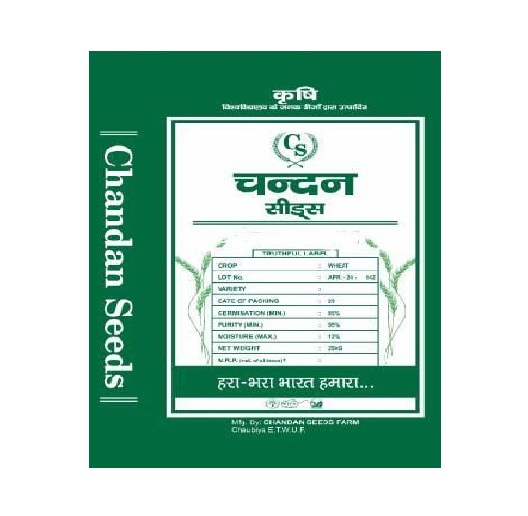

Wheat Seeds - Chandan Seeds
CHARACTERISTICS OF PBW-154
Yield: It has a high yield potential, with reported average yields ranging from 41-45 quintals per hectare and potential yields of up to 50-55 quintals per hectare.
Maturity: It is an early-maturing variety, typically taking 129-134 days to mature.
Plant Traits: The plants are semi-dwarf, with a height of approximately 90-100 cm.
Grain Quality: The grains are amber, medium-bold, hard, and lustrous. They are symmetrically shaped and have good quality for making chapati, which remains soft for several hours after cooking.
Disease Resistance: PBW 154 is known for its resistance to various diseases, including leaf rust and Karnal bunt.
CHARACTERISTICS OF PBW-826
Yield: It is known for its high yield potential. The average grain yield is reported to be around 24.0 quintals per acre, with a potential yield reaching up to 33.6 quintals per acre (84.0 q/ha) under well-managed conditions. It has been shown to out-yield other popular varieties like HD 3086, HD 2967, and DBW 187.
Maturity: The variety has a maturity period of approximately 148 days. This makes it an early-maturing option compared to some other recent varieties.
Plant Height: PBW 826 is a semi-dwarf variety with an average plant height of about 100 cm. This shorter stature helps to reduce the risk of lodging, which is when the crop falls over due to wind or rain.
Grain Quality: It is characterized by bold, amber, hard, and lustrous grains. It has a high hectolitre weight, which is a measure of grain density, and a higher 1000-grain weight, indicating a good grain size.
This contributes to better flour quality and quantity. The grains also have a high protein and zinc content.
Disease Resistance: A significant advantage of PBW 826 is its resistance to various diseases, particularly yellow and brown rusts. This reduces the need for frequent fungicide applications, saving costs for farmers. It also has resistance to wheat blast.
Heat Tolerance: The variety is relatively less sensitive to high-temperature stress, which is a crucial trait given the risk of heatwaves during the grain-filling stage. Its heat tolerance helps to prevent premature ripening and a reduction in grain weight.
CHARACTERISTICS OF PBW-343
Yield: The original PBW 343 was known for its high yield potential, averaging around 46-50 quintals per hectare (18-20 quintals per acre). The improved Unnat PBW 343 offers a similar high yield, with an average of 23.2 quintals per acre.
Maturity: It is a medium-to-late maturing variety. The original PBW 343 had a maturity period of approximately 126-134 days, while Unnat PBW 343 matures in about 155 days.
Plant Height: PBW 343 is a semi-dwarf variety, with an average plant height of about 80-100 cm. This shorter stature helps to prevent lodging, which is when the crop falls over.
Grain Quality: The grains are typically amber in color, hard to semi-hard in texture, and bold in size. It has good hectoliter weight, which is an indicator of grain density and flour yield.
Disease Resistance: While the original PBW 343 was susceptible to rusts, Unnat PBW 343 is specifically bred for improved resistance. It is resistant to brown rust and moderately resistant to yellow rust. It also has some tolerance to Karnal bunt and blight.
CHARACTERISTICS OF HD-2967
Yield: HD 2967 is known for its high yield potential. The average grain yield is around 22-24 quintals per acre (51.38 q/ha), with a potential yield that can reach up to 70 quintals per hectare under optimal conditions. Its yield advantage helped it to replace older, high-yielding varieties like PBW 343.
Maturity: It has a medium maturity period, typically taking around 130-140 days from sowing to harvesting. This makes it suitable for timely sowing.
Plant Height: HD 2967 is a semi-dwarf variety, with an average plant height of about 100-101 cm. This shorter stature helps to reduce the risk of lodging, which can be a significant problem in high-yielding crops.
Grain Quality: The grains are amber in color, medium-bold, hard, and lustrous. HD 2967 is particularly valued for its excellent chapati-making quality, which is a crucial factor for a variety cultivated in a region where wheat is a staple food. It also has a good protein content (around 12.33%) and is high in iron and zinc, adding to its nutritional value.
Disease Resistance: When it was released, HD 2967 was known for its resistance to leaf rust and moderate resistance to stripe rust. However, like other popular varieties, new races of the rust pathogen have emerged over time, and its resistance has diminished. This has prompted the development of improved versions.
Improved Version: To address the issue of rust susceptibility, an improved version known as HD 3406 (Unnat HD 2967) has been developed. This new variety was bred using marker-assisted backcross breeding to incorporate multiple rust resistance genes, making it more resilient and maintaining the high-yield and quality traits of its parent.
CHARACTERISTICS OF DBW-187
Yield: DBW 187 is known for its exceptional yield potential. It has an average yield of 61.3 quintals per hectare, with a potential yield that can go as high as 96.6 quintals per hectare under optimal cultivation and management practices. It has shown a significant yield advantage over older varieties like HD 2967, which it is replacing in many areas.
Maturity: This is a medium-duration variety that matures in approximately 120-146 days. Its flowering period is around 77 days after sowing.
Plant Height: DBW 187 is a semi-dwarf variety with an average plant height of around 100 cm. This robust, medium height helps reduce the risk of lodging, ensuring the crop stands strong against wind and rain.
Grain Quality: The grains are bold, amber, hard, and lustrous. DBW 187 is particularly valued for its excellent chapati-making quality, with a score of 7.7 out of 10. It also has a high protein content (around 11.4%) and is notable for being biofortified, with a high iron content of 43.1 ppm, making it a nutritionally superior choice. The variety also has good biscuit-making properties.
Disease Resistance: One of the most significant advantages of DBW 187 is its strong resistance to prevalent wheat diseases. It is highly resistant to yellow rust and brown rust, which are major threats to wheat crops in India. It also shows a high level of resistance to wheat blast and other foliar diseases.
Heat Tolerance: DBW 187 has shown a good degree of heat tolerance, performing better than varieties like HD 3086 under warmer conditions during the grain-filling stage. This makes it a suitable option for regions facing climate challenges.
Product Details
| Crop: | Wheat |
| Variety: | All Variety |
| Company: | Chandan Seeds Farm - Etawah |
| Packing Size: | 40 kg |
| Minimum Order Quantity: | 20 MT |
Description
CHARACTERISTICS OF PBW-154
Yield: It has a high yield potential, with reported average yields ranging from 41-45 quintals per hectare and potential yields of up to 50-55 quintals per hectare.
Maturity: It is an early-maturing variety, typically taking 129-134 days to mature.
Plant Traits: The plants are semi-dwarf, with a height of approximately 90-100 cm.
Grain Quality: The grains are amber, medium-bold, hard, and lustrous. They are symmetrically shaped and have good quality for making chapati, which remains soft for several hours after cooking.
Disease Resistance: PBW 154 is known for its resistance to various diseases, including leaf rust and Karnal bunt.
CHARACTERISTICS OF PBW-826
Yield: It is known for its high yield potential. The average grain yield is reported to be around 24.0 quintals per acre, with a potential yield reaching up to 33.6 quintals per acre (84.0 q/ha) under well-managed conditions. It has been shown to out-yield other popular varieties like HD 3086, HD 2967, and DBW 187.
Maturity: The variety has a maturity period of approximately 148 days. This makes it an early-maturing option compared to some other recent varieties.
Plant Height: PBW 826 is a semi-dwarf variety with an average plant height of about 100 cm. This shorter stature helps to reduce the risk of lodging, which is when the crop falls over due to wind or rain.
Grain Quality: It is characterized by bold, amber, hard, and lustrous grains. It has a high hectolitre weight, which is a measure of grain density, and a higher 1000-grain weight, indicating a good grain size.
This contributes to better flour quality and quantity. The grains also have a high protein and zinc content.
Disease Resistance: A significant advantage of PBW 826 is its resistance to various diseases, particularly yellow and brown rusts. This reduces the need for frequent fungicide applications, saving costs for farmers. It also has resistance to wheat blast.
Heat Tolerance: The variety is relatively less sensitive to high-temperature stress, which is a crucial trait given the risk of heatwaves during the grain-filling stage. Its heat tolerance helps to prevent premature ripening and a reduction in grain weight.
CHARACTERISTICS OF PBW-343
Yield: The original PBW 343 was known for its high yield potential, averaging around 46-50 quintals per hectare (18-20 quintals per acre). The improved Unnat PBW 343 offers a similar high yield, with an average of 23.2 quintals per acre.
Maturity: It is a medium-to-late maturing variety. The original PBW 343 had a maturity period of approximately 126-134 days, while Unnat PBW 343 matures in about 155 days.
Plant Height: PBW 343 is a semi-dwarf variety, with an average plant height of about 80-100 cm. This shorter stature helps to prevent lodging, which is when the crop falls over.
Grain Quality: The grains are typically amber in color, hard to semi-hard in texture, and bold in size. It has good hectoliter weight, which is an indicator of grain density and flour yield.
Disease Resistance: While the original PBW 343 was susceptible to rusts, Unnat PBW 343 is specifically bred for improved resistance. It is resistant to brown rust and moderately resistant to yellow rust. It also has some tolerance to Karnal bunt and blight.
CHARACTERISTICS OF HD-2967
Yield: HD 2967 is known for its high yield potential. The average grain yield is around 22-24 quintals per acre (51.38 q/ha), with a potential yield that can reach up to 70 quintals per hectare under optimal conditions. Its yield advantage helped it to replace older, high-yielding varieties like PBW 343.
Maturity: It has a medium maturity period, typically taking around 130-140 days from sowing to harvesting. This makes it suitable for timely sowing.
Plant Height: HD 2967 is a semi-dwarf variety, with an average plant height of about 100-101 cm. This shorter stature helps to reduce the risk of lodging, which can be a significant problem in high-yielding crops.
Grain Quality: The grains are amber in color, medium-bold, hard, and lustrous. HD 2967 is particularly valued for its excellent chapati-making quality, which is a crucial factor for a variety cultivated in a region where wheat is a staple food. It also has a good protein content (around 12.33%) and is high in iron and zinc, adding to its nutritional value.
Disease Resistance: When it was released, HD 2967 was known for its resistance to leaf rust and moderate resistance to stripe rust. However, like other popular varieties, new races of the rust pathogen have emerged over time, and its resistance has diminished. This has prompted the development of improved versions.
Improved Version: To address the issue of rust susceptibility, an improved version known as HD 3406 (Unnat HD 2967) has been developed. This new variety was bred using marker-assisted backcross breeding to incorporate multiple rust resistance genes, making it more resilient and maintaining the high-yield and quality traits of its parent.
CHARACTERISTICS OF DBW-187
Yield: DBW 187 is known for its exceptional yield potential. It has an average yield of 61.3 quintals per hectare, with a potential yield that can go as high as 96.6 quintals per hectare under optimal cultivation and management practices. It has shown a significant yield advantage over older varieties like HD 2967, which it is replacing in many areas.
Maturity: This is a medium-duration variety that matures in approximately 120-146 days. Its flowering period is around 77 days after sowing.
Plant Height: DBW 187 is a semi-dwarf variety with an average plant height of around 100 cm. This robust, medium height helps reduce the risk of lodging, ensuring the crop stands strong against wind and rain.
Grain Quality: The grains are bold, amber, hard, and lustrous. DBW 187 is particularly valued for its excellent chapati-making quality, with a score of 7.7 out of 10. It also has a high protein content (around 11.4%) and is notable for being biofortified, with a high iron content of 43.1 ppm, making it a nutritionally superior choice. The variety also has good biscuit-making properties.
Disease Resistance: One of the most significant advantages of DBW 187 is its strong resistance to prevalent wheat diseases. It is highly resistant to yellow rust and brown rust, which are major threats to wheat crops in India. It also shows a high level of resistance to wheat blast and other foliar diseases.
Heat Tolerance: DBW 187 has shown a good degree of heat tolerance, performing better than varieties like HD 3086 under warmer conditions during the grain-filling stage. This makes it a suitable option for regions facing climate challenges.